Moroccan Cooperatives: How We Source Traditional Beauty
The Marocraft team · September 29, 2026 · 5 min read
 The Marocraft teamSeptember 29, 20265 min read

In this article
Behind every product we sell are Moroccan cooperatives and family workshops that still make cosmetics the old way. This article explains how we source from them, what makes a product genuinely traditional, and what you can check for yourself before you buy.
No vague promises and no marketing fog: just how it works, in plain words, with the products that show it best.
Who makes what we sell
Marocraft sells natural Moroccan cosmetics made by cooperatives and family workshops. We buy directly from the makers, with no middlemen in between.
Just as important is what we do not do: we never dilute, perfume or re-label what they make. The soap, kohl, aker fassi or oil you receive is the product exactly as the makers prepared it, simply packed in our own atelier and sent on to you.
Why traditional makers stay invisible online
Most of the cooperatives we work with have no online shop, no way to accept a payment from abroad and no courier beyond their region. Their products can be excellent and still never travel further than the local market.
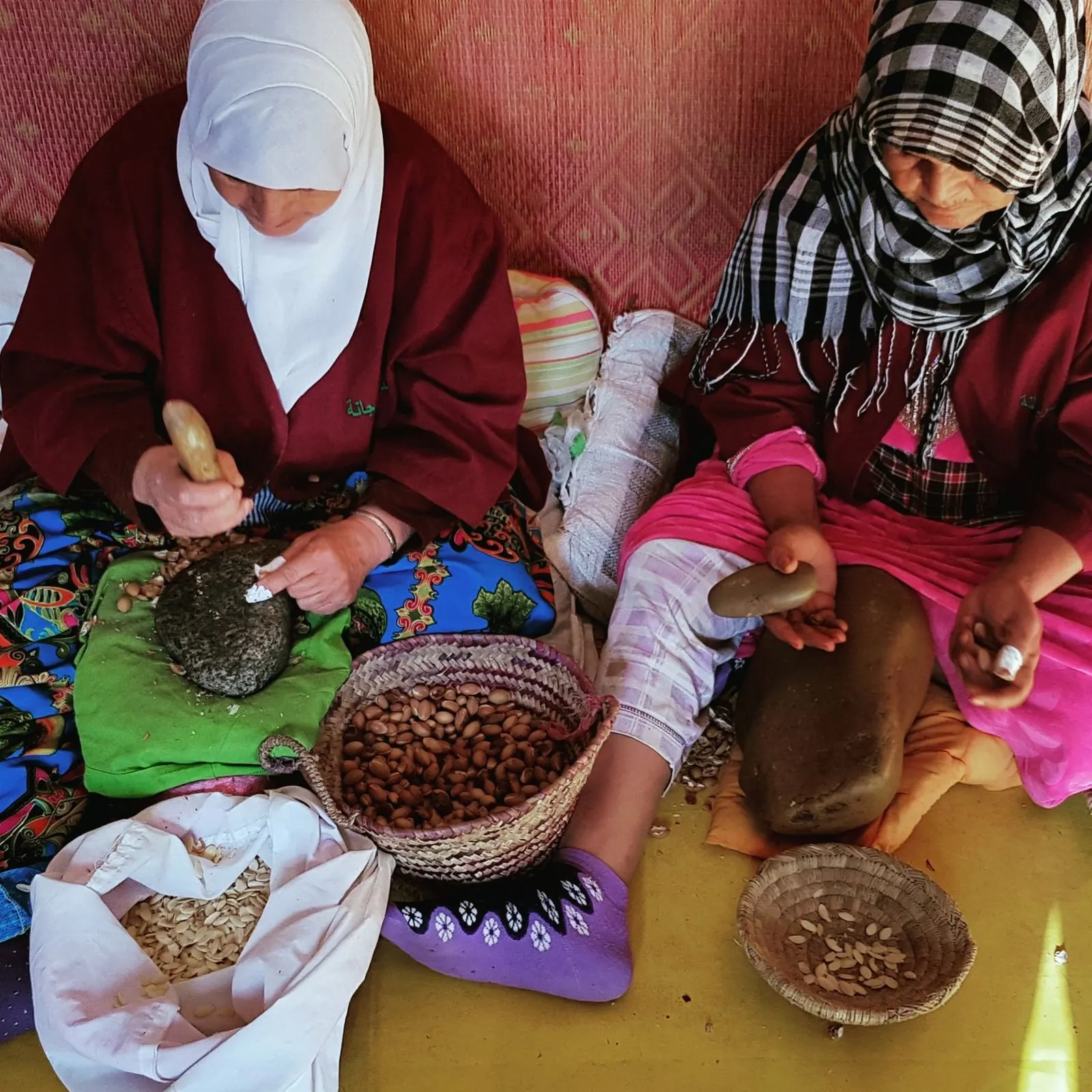
That is the gap we fill. We photograph every product, write down exactly what is inside, translate the rituals into clear steps and pack each order by hand in our own atelier.
It is also why our product pages read the way they do: ingredient lists, photos of the real item and step-by-step instructions. You see what the makers make, and you learn how it is meant to be used.
Hand-ground ithmid kohl
Traditional kohl is all about texture. Our ithmid kohl powder is prepared from selected ithmid stone and ground the traditional way into a fine, smooth powder, then presented in a glass bottle with a traditional applicator.
A traditional kohl is a loose, dry powder rather than a waxy pencil, and it is for external cosmetic use: never share the applicator, wipe it clean after each use, stop if any irritation appears and keep it away from children. To learn the gesture, read our guide on how to apply ithmid kohl, or browse the Eyes & Kohl collection.
Olive beldi soap with aker fassi
Beldi soap is the soft black soap at the heart of the hammam, and olive oil is its traditional base. The olive oil beldi soap with aker fassi pairs that base with aker fassi for a cleanse with a gentle exfoliating feel, in a 200 g format made for regular hammam days.
It is used the traditional way: spread on warm, damp skin, left for a few minutes, then rinsed before the kessa glove. Our article on what beldi soap is and our guide to the Moroccan hammam at home walk you through every step.
Aker fassi in clay pots
Aker fassi is one of the most recognisable traditional cosmetics: a red botanical pigment made from sun-dried poppy petals and pomegranate, set in a small terracotta pot. Our traditional aker fassi lip and cheek stain is made this way and applied with a damp fingertip or brush.
The clay pot is part of how the product is made and how it is used: you pick up the colour straight from it. Do a patch test before the first use, and see our guide on how to use aker fassi for layering tips on lips and cheeks.
Cold-pressed prickly pear seed oil
Our prickly pear seed oil shows what "traditional" means for an oil. The fruit is harvested in Morocco; the seeds are separated, dried and pressed mechanically at low temperature, then the oil is filtered but not refined, bleached or deodorised.
Because nothing is stripped out, its golden-green colour and faint natural scent vary slightly from one harvest to the next, which is simply what an unrefined oil does. The ingredient list is one line long: prickly pear seed oil. Our prickly pear seed oil guide explains how to use it.
How to check a traditional product before you buy
- Read the ingredient list: traditional products tend to have short lists, and on every product page we write down exactly what is inside.
- Look at the real photos: we photograph every product, so you can see the actual texture, pot and colour before ordering.
- Check how it is used: a traditional product comes with a ritual, and each page translates it into clear steps.
- Patch test at home: natural does not mean identical for every skin, so try any new product on a small area of the forearm first.
Why your purchase matters
When these products sell, the people who still make them the old way, hand-grinding kohl, making olive beldi soap, setting aker fassi in clay pots, keep making them. Buying a bar of soap is a small act, but it keeps a skill in use.
Explore the Hammam Ritual collection or our gift sets, and if you are buying for someone else, our Moroccan beauty gift guide will help. Every order is dispatched within 1 working day and shipped worldwide with FedEx International Priority, with a tracking number (see our shipping page); cash on delivery is available in Morocco.
Shop this ritual
All
 Sold out
 Best seller
Frequently asked questions
Yes. We buy directly from the cooperatives and family workshops that make our products, with no middlemen.
No. We never dilute, perfume or re-label what the makers produce. We photograph each product, write down what is inside and pack every order by hand.
Most of the ones we work with have no online shop, no way to accept a payment from abroad and no courier beyond their region. Marocraft takes care of that part.
Each product page lists exactly what is inside, with real photos and usage steps. If your skin is sensitive, patch test any new product first.


